
 Chattahoochee Riverkeeper
Water Quality Monitoring
Testing and monitoring are key tools in our ongoing stewardship of water quality and public health.
Concerned residents, neighborhood groups, schools, and people in the Chattahoochee watershed · During the summer recreation season, Swim Guide weekly updates; BacteriAlert results posted within 24 hours of data collection; lake nutrient monitoring monthly
From chattahoochee.org/our-work/water-quality-monitoring ↗About this program
Neighborhood Water Watch (NWW) is a fast-paced community driven collaborative program between CRK and neighborhood groups, schools, and people in our watershed. The goal is to work together to assess and improve water quality in urban streams, while protecting human health in neighboring communities. Concerned residents from all reaches of the Chattahoochee River basin bring water samples from over 200 stream stations to CRK's laboratories, as part of NWW. Water samples are promptly analyzed for turbidity, conductivity, optical brighteners, and E. coli. Any threats indicated are addressed by CRK, as we work with local governments, neighborhood groups, and leaders to stop public health threats and restore our streams.
The mission of the BacteriAlert program is to collect water samples at three Chattahoochee River locations in the Chattahoochee River National Recreation Area (Medlock Bridge, Powers Ferry and Paces Ferry) to assess how safe the water is for swimming, wading and boating. Results are posted on the USGS BacteriAlert webpage within 24 hours of data collection.
Since 2008, at 15 river locations downstream of Atlanta, CRK has monitored dissolved oxygen levels—a key indicator of a river's health. This initiative is driven by our growing concern that low water levels in summer—which can result in low dissolved oxygen levels—may be harming the river's ecosystem and water quality, as well as impacting the health of the communities and wildlife dependent upon it.
CRK conducts monthly monitoring of nutrient levels in Lake Lanier, West Point Lake, and Lake Walter F. George (Lake Eufaula) between April and October. Because our sampling and quality-assurance plans are approved by the Georgia Environmental Protection Division (EPD), our data is used by EPD and others to make important regulatory decisions.
In 2018, we launched our Chattahoochee Aquatic Sensor System Integrated (CASSI) program to create a real-time water quality sensor using technology developed by the Stroud Water Research Center. We are deploying the devices (aka CASSIs) in streams and the river to detect conductivity, temperature and turbidity. Every 15 minutes, the CASSIs send the data over a cellular network to a web data portal that we monitor remotely.
Microplastics are small pieces of plastic (less than 5 mm in size) that come from degraded trash in the water or through the wastewater treatment system. CRK is collaborating with researchers at Georgia State University to quantify concentrations of microplastics in the Chattahoochee River and urban tributaries.
Questions
What is Neighborhood Water Watch?
Neighborhood Water Watch (NWW) is a fast-paced community driven collaborative program between CRK and neighborhood groups, schools, and people in our watershed. The goal is to work together to assess and improve water quality in urban streams, while protecting human health in neighboring communities.
Is it safe to swim here?
Is it safe to swim here? This is a question we often get at Chattahoochee Riverkeeper. During the summer recreation season, we publish a Swim Guide – a series of maps with red or green lights to help you decide if it is safe for primary contact recreation at popular swimming spots on the Chattahoochee River.
Why is CRK monitoring dissolved oxygen?
This initiative is driven by our growing concern that low water levels in summer—which can result in low dissolved oxygen levels—may be harming the river's ecosystem and water quality, as well as impacting the health of the communities and wildlife dependent upon it.
What are PFAS?
Also known as "forever chemicals," PFAS (per- and polyfluoroalkyl substances) are a large group of chemicals that are resistant to heat, water, and oil.
What are microplastics?
Microplastics are small pieces of plastic (less than 5 mm in size) that come from degraded trash in the water or through the wastewater treatment system.
Details
- Who
- Concerned residents, neighborhood groups, schools, and people in the Chattahoochee watershed
- When
- During the summer recreation season, Swim Guide weekly updates; BacteriAlert results posted within 24 hours of data collection; lake nutrient monitoring monthly
- Where
- Chattahoochee River and its tributaries, urban streams, Chattahoochee River National Recreation Area, Lake Lanier, West Point Lake, and Lake Walter F. George
Run by
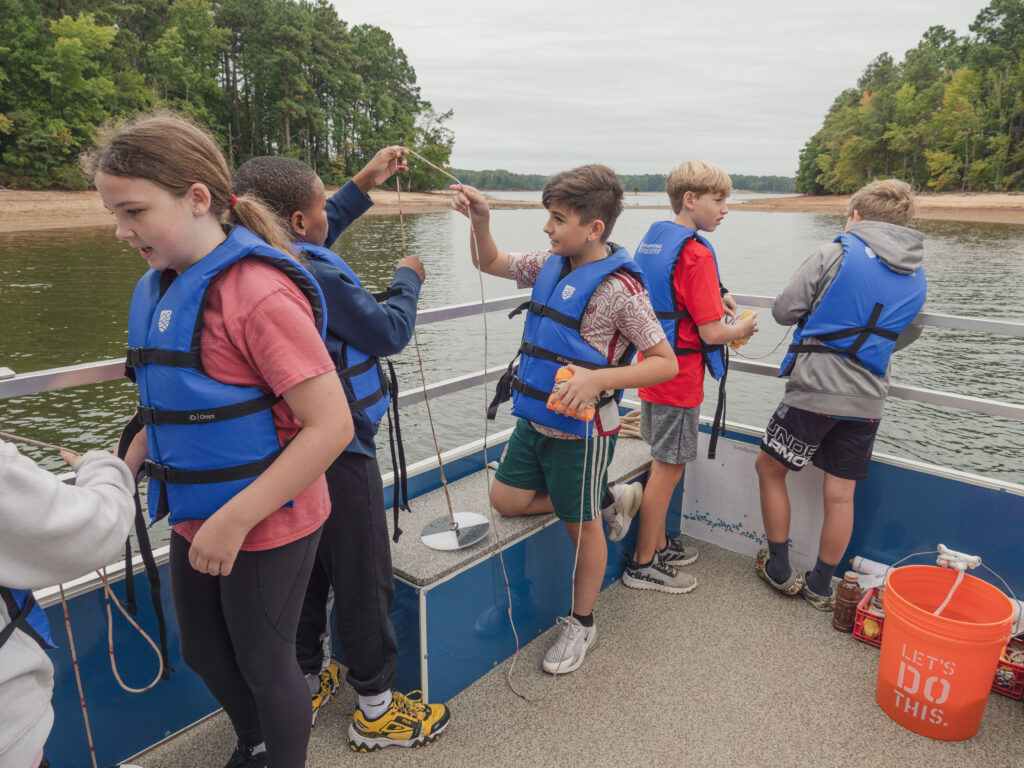 Floating ClassroomThe Floating Classroom is an on-the-water environmental education program that teaches science, ecology, history, and math in accordance with STEM goals and state education performance standards.
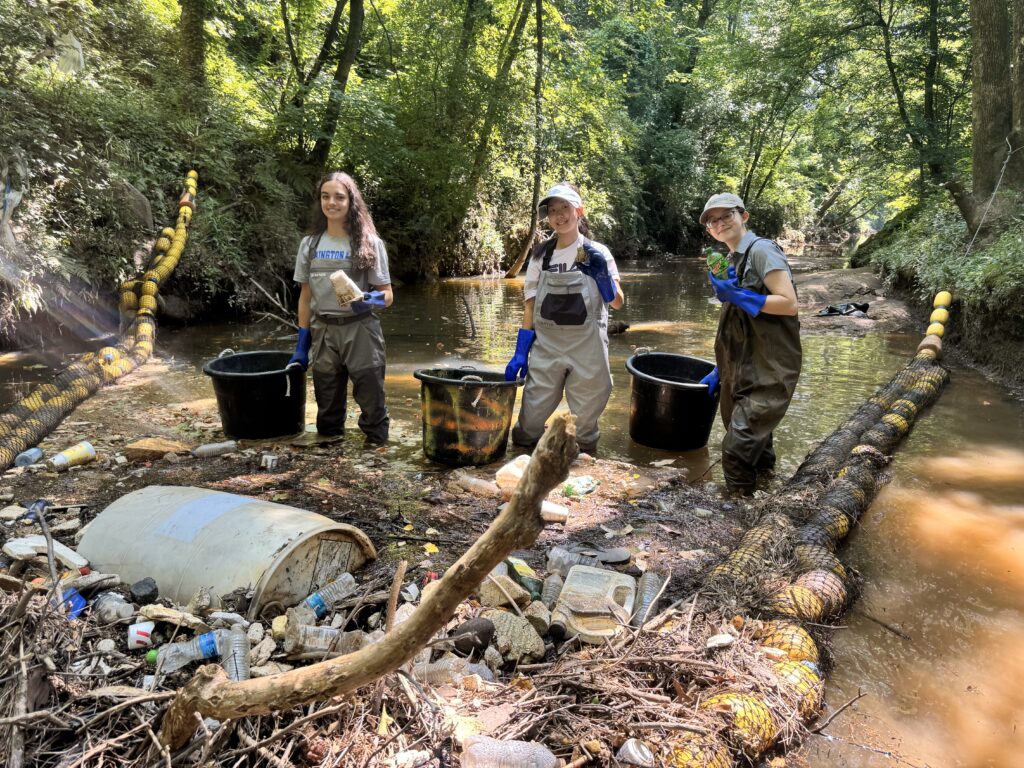 Water Warriors on Campus & on Summer BreakWater Warriors on Campus equips high school and college students to engage their peers on the importance of water conservation and Chattahoochee Riverkeeper’s mission.
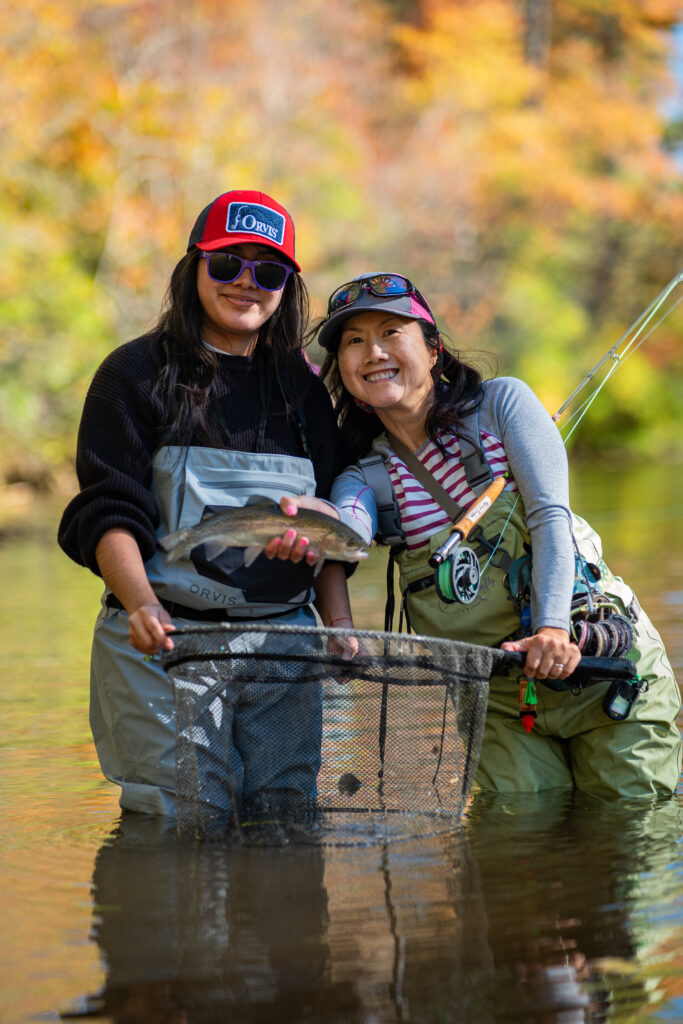 Becca Sue Klein All Kids FishThe annual Becca Sue Klein All Kids Fish events inspire the next generation of fly anglers and conservationists through three full-day fly fishing retreats.