
 Chattahoochee Riverkeeper
In-Stream Trash Removal
The volume of garbage in our rivers, lakes, and oceans has become a global crisis.
From chattahoochee.org/our-work/in-stream-trash-removal ↗About this program
During every rainstorm, stormwater carries litter pollution from roads, parks, and sidewalks into streams where it can break down and harm critical habitats. If left unchecked, plastic litter from the Chattahoochee Basin will break down into microplastics which eventually flow into the Gulf of Mexico.
Solving the problem will require effective and scalable strategies implemented at the community-level. To address this issue, Chattahoochee Riverkeeper employs devices called “trash traps” to remove floating litter from tributaries of Chattahoochee River.
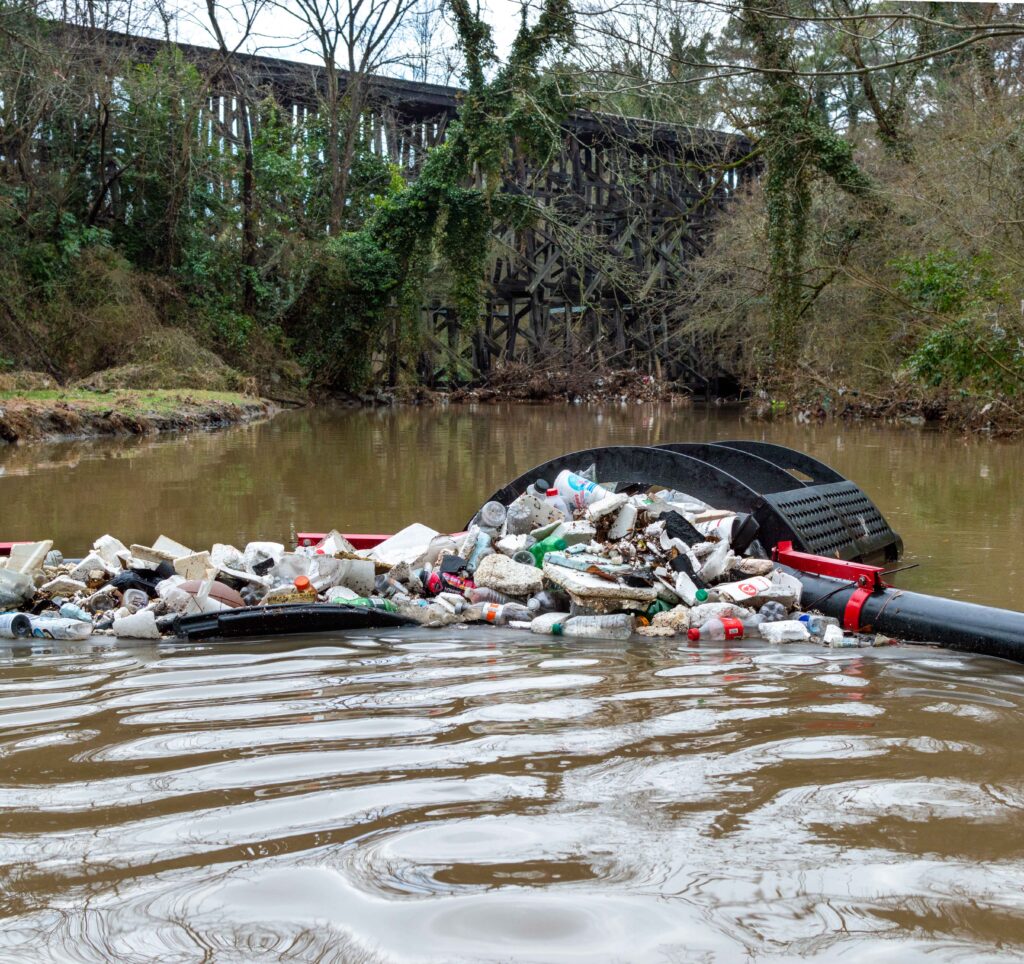
The trash traps are small-stream litter collection devices designed to catch floating garbage from stormwater runoff. The devices use booms to guide trash into a collection area where it can be captured and emptied after a rainstorm. Since the program’s inception in 2019, CRK’s trash traps have collected more than 15,000 pounds of floating trash. Approximately 40% of the volume of collected trash is recycled.
CRK operates 17 trash traps in seven counties throughout Georgia, including floating wetland trash traps, and each trap is designed to meet the needs of the local watershed. Trash traps require regular maintenance: they are emptied on a weekly basis and any recyclable material is separated from vegetation and landfill.
During the cleanout process, crews conduct a forensic litter audit using the U.S. Environmental Protection Agency’s Escaped Trash Assessment Protocol or ETAP. Data generated through this protocol provides an unprecedented level of insight into local pollution conditions. As data is analyzed, CRK will work with communities to develop tailored solutions for reducing litter the Chattahoochee watershed.
As more trash traps enter the watershed, there will be opportunities for volunteers to maintain the devices and conduct ETAP analyses alongside CRK staff.
Questions
What are the trash traps?
The trash traps are small-stream litter collection devices designed to catch floating garbage from stormwater runoff. The devices use booms to guide trash into a collection area where it can be captured and emptied after a rainstorm.
How much trash have the trash traps collected?
Since the program’s inception in 2019, CRK’s trash traps have collected more than 15,000 pounds of floating trash. Approximately 40% of the volume of collected trash is recycled.
How often are the trash traps emptied?
Trash traps require regular maintenance: they are emptied on a weekly basis and any recyclable material is separated from vegetation and landfill.
How can volunteers get involved?
As more trash traps enter the watershed, there will be opportunities for volunteers to maintain the devices and conduct ETAP analyses alongside CRK staff.
 Floating ClassroomThe Floating Classroom is an on-the-water environmental education program that teaches science, ecology, history, and math in accordance with STEM goals and state education performance standards.
 Water Warriors on Campus & on Summer BreakWater Warriors on Campus equips high school and college students to engage their peers on the importance of water conservation and Chattahoochee Riverkeeper’s mission.
 Becca Sue Klein All Kids FishThe annual Becca Sue Klein All Kids Fish events inspire the next generation of fly anglers and conservationists through three full-day fly fishing retreats.