
 Keep Smyrna Beautiful
Habitat Rehabilitations
Habitat rehabilitations work to restore native ecosystems through removal of invasive species and re-introduction of native plants.
Volunteers aged 12 and up · Monthly, year-round; various times, group scheduling available; duration 1.5-2 hours
From keepsmyrnabeautiful.com/programs-events/habitat-rehabilitation ↗About this program
An invasive species is an organism that is not native to an ecosystem, reproduces quickly, spreads aggressively, and causes harm. Common invasive specides include English Ivy, Chinese privet, Persian silk tree (mimosa), and Chinese & Japanese wisteria.
Removing invasive species makes natural areas more hospitable to native plants, which are important because they support local wildlife, stabilize soil, and preserve biodiversity. This helps protect the local ecosystem.
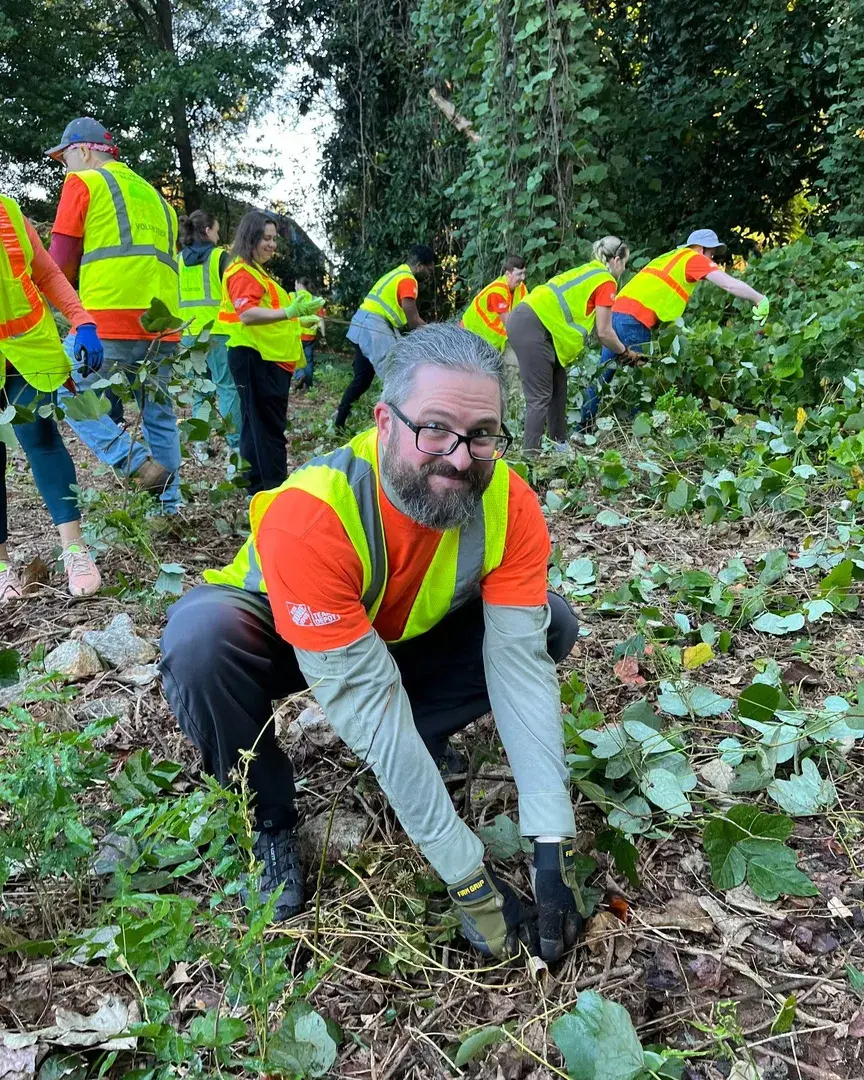
Volunteers thin out and remove invasive plants, remove trash, and plant native trees.
Questions
Who is eligible to participate?
Volunteers must be aged 12 and up to participate. Volunteers under the age of 16 must volunteer alongside a parent, guardian, or other supervising adult.
How long does a session last?
1.5-2 hours
What do volunteers do?
Volunteers thin out and remove invasive plants, remove trash, and plant native trees.
Details
- Who
- Volunteers aged 12 and up
- When
- Monthly, year-round; various times, group scheduling available; duration 1.5-2 hours
- Where
- City-owned natural areas and parks
- Ages
- 12 and up; volunteers under 16 must volunteer alongside a parent, guardian, or other supervising adult
Run by
Adopt-a-TreeFreeAdopt-a-Tree supports these outcomes by rescuing young trees and seedlings and passing them on to residents, schools, parks, and other organizations.Storm Drain MarkingStorm Drain Marking volunteers place eye-catching decals on top of the storm drains to inform the public that dumping into these drains is not permitted.Sensory GardenThe Sensory Garden is designed to help visitors connect with nature by engaging all the senses, from the sound of the water installation to the fragrant rosemary bush and the soft lamb's ear.