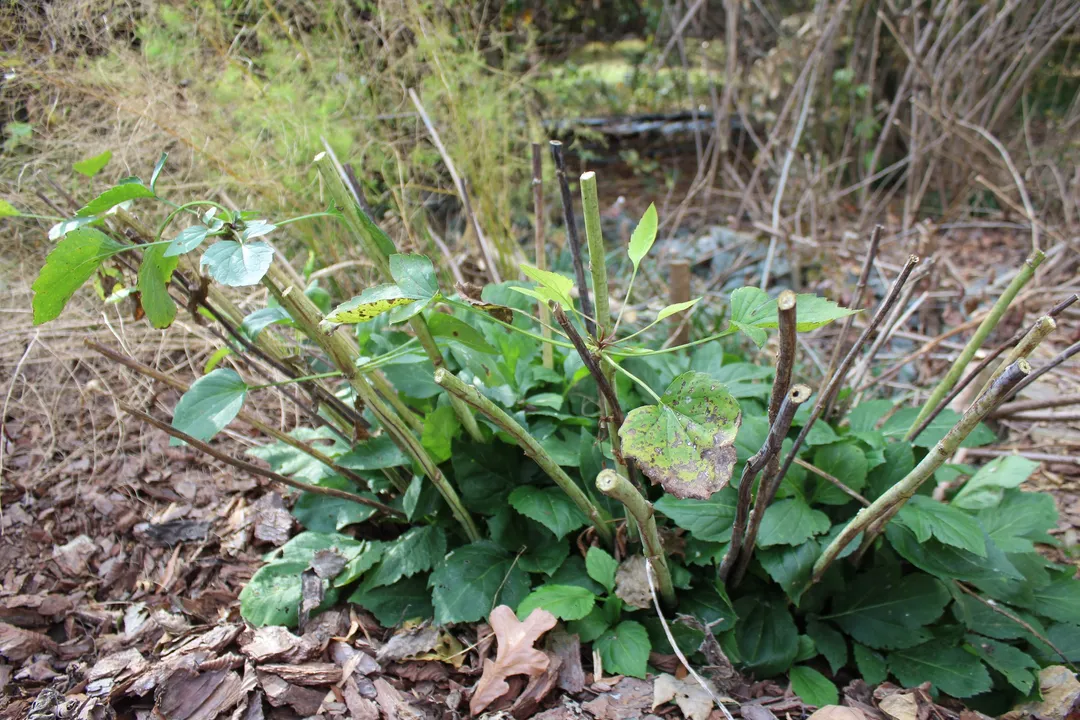

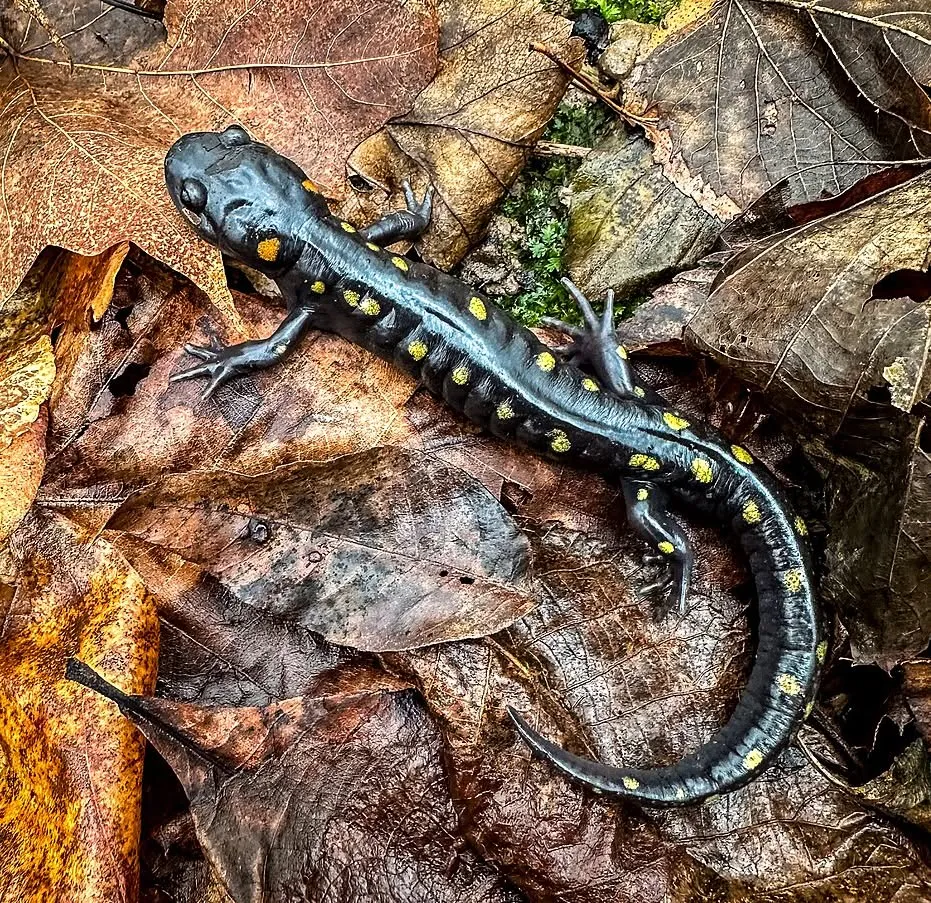


🔍 Salamander spotlight series! 🔍 Say hello to the spotted salamander (Ambystoma maculatum) 👋 This species is a member of the mole salamander family, Ambystomatidae. These secretive amphibians spend much of their lives underground or hidden beneath logs, rocks, and leaf litter, emerging to forage and breed when conditions are right. Their diet includes earthworms, slugs, snails, spiders, and other small invertebrates. Seasonal wetlands known as ephemeral pools are important breeding habitats for spotted salamanders. These pools fill with water during wet periods and often dry out later in the year. Because they frequently lack fish, they can provide a safer place for salamander eggs and larvae to develop. On rainy nights during the breeding season, large numbers of spotted salamanders may migrate to these pools to reproduce. And their courtship is quite the spectacle! Males perform a synchronized, dance-like display called a liebesspiel and deposit packets of sperm called spermatophores on the pool bottom or submerged vegetation. Females pick up these packets to fertilize their eggs internally. Protecting seasonal wetlands and the forests surrounding them helps safeguard the next generation of these awesome amphibians! 📸: Spotted Salamander (Ambystoma maculatum) by Andrew Murray, via Wikimedia Commons. Licensed under CC BY 4.0; Eno Staff [Image descriptions: spotted salamander on top of bed of brown and yellow leaves; spotted salamander crawling through dirt near the Eno River] #SpottedSalamander #EnoRiver #AmphibianConservation #SalamanderScience #SalamanderSpotlightSeries